
Sweet Potato
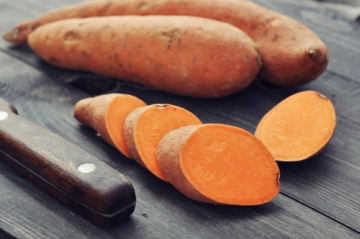
Sweet potatoes owe their rich orange hue to beta-carotene, a phytonutrient that the body converts to vitamin A. Vitamin A is essential for healthy vision, skin and immune function.
Choosing fruits and vegetables of every color in the rainbow ensures you get the nutrients your body needs. In addition to fiber, vitamins and minerals, they contain nutrients known as phytonutrients. These powerful disease-fighting substances are what give fruits and vegetables their array of colors.
Did You Know?
- Cooking sweet potatoes in their skin helps better preserve their nutrient content.
- Sweet potatoes are roots and white potatoes are tubers.
- Although the names are used interchangeably in the supermarket, sweet potatoes and yams are two different foods.
- The brighter the color of the sweet potato, the higher the beta-carotene content.
- Sweet potatoes are native to Central and South America and are one of the oldest vegetables known to man.
Shopping, Preparing and Storing
- Choose sweet potatoes that are firm and have a smooth skin, with no cracks, soft spots or blemishes.
- Before peeling or cutting sweet potatoes, make sure they are washed to remove any remaining dirt from the skin.
- Uncooked sweet potatoes can be stored in a cool, dry place (not the refrigerator) for up to two weeks.
Cooking Tips
- Sweet potatoes can be broiled, baked, roasted, steamed, fried or grilled. They can even be used as a puree in baked goods!
Sweet Potato Nutrition
Serving size: 1 medium potato
Calories: 112; Total Fat: 0 g; Saturated Fat: 0 g; Total Carbohydrates: 26 g; Protein: 2 g; Sodium: 72 mg
Download a flyer to print about Florida
sweet potatoes
[
 1.6 MB
]
.
1.6 MB
]
.


