
Pumpkin
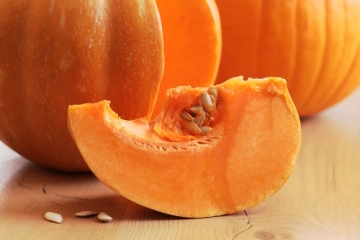
Pumpkins are a member of the gourd family, which includes cucumbers, honeydew melons, cantaloupe, watermelons and zucchini. Beta-carotene is responsible for giving pumpkins their bright, orange color. It is an important antioxidant that is converted to vitamin A in the body.
Did You Know?
- The name pumpkin originated from the Greek word "pepon," meaning large melon.
- Pumpkin flesh is high in fiber and the seeds are a good source of protein.
- Pumpkins can range in size from less than a pound to more than 1,000 pounds!
- 1 cup of cooked pumpkin flesh is less than 50 calories.
- Pumpkins are 90 percent water.
- Pumpkins are most often available from September to November.
Shopping, Preparing and Storing
- Select pumpkins that are free of blemishes, harvested with their stems intact and feel heavy for their size.
- Choose smaller pumpkins for a tender, sweeter and less-watery flesh.
- Pumpkins can be kept for up to a month in a cool, dry place.
- Leftover cooked pumpkin can be frozen for up to a year.
Cooking Tips
- Pumpkins can be baked, steamed or boiled and the seeds can be roasted as a snack.
- Pumpkin puree can be incorporated into many baked dishes, soups, curries, smoothies and dips.
Pumpkin Nutrition
Serving size: 1/2 cup cooked pumpkin
Calories: 25; Total Fat: 0 g; Saturated Fat: 0 g; Total Carbohydrates: 6 g; Protein: 1 g; Sodium: 1 mg
Download a flyer to print about Florida
pumpkins
[
 1.1 MB
]
.
1.1 MB
]
.


