
Bell Pepper
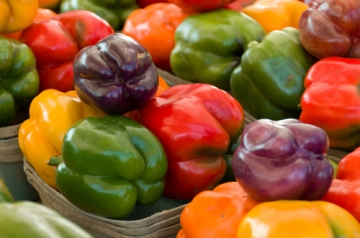
One plant, three flavors! All bell peppers come from the same plant but offer a different flavor depending on when they are picked. A green bell pepper is picked before it’s fully ripe. Left on the plant to ripen, a green pepper becomes an orange or yellow pepper with a fruitier flavor. If left on the plant even longer, the yellow bell pepper turns red and sweet!
Florida bell peppers are packed with vitamins, minerals and antioxidants, which protect against the development of heart disease, cancer and diabetes while providing a combination of tangy taste and crunchy texture.
Did You Know?
- Today, most green bell peppers sold in the U.S. are grown in Florida — mostly in Collier, Hendry, Hillsborough, Manatee and Palm Beach counties.
- Bell peppers are available all year round.
- Peppers provide very few calories because they are mostly water.
- Foods high in fiber, like bell peppers, fill you up faster and make you less likely to overeat.
- Bell peppers are packed with vitamin C. Green bell peppers have twice as much vitamin C as an orange, and red bell peppers have three times as much.
Shopping, Preparing and Storing
- Avoid buying peppers with cuts, bruises, spots or shriveled stems.
- Store bell peppers in the refrigerator crisper drawer for up to one week.
- Bell peppers that have been sliced can be frozen for later use.
Cooking Tips
- Cut the tops off of peppers and stuff with rice, cheese, meat or your filling of choice and bake for a quick and filling meal. Try baking them in a muffin pan to help them retain their shape.
- Try roasting bell peppers under high heat in the oven to help bring out their sweetness.
- Bell peppers can be eaten raw, stuffed, roasted, stewed or pickled.
Bell Pepper Nutrition
Serving size: 1 cup
Calories: 18; Total Fat: 0 g; Saturated Fat: 0 g; Total Carbohydrates: 4 g; Protein: 1 g; Sodium: 3 mg
Download a flyer to print about Florida
bell peppers
[
 5.1 MB
]
.
5.1 MB
]
.


