
Okra
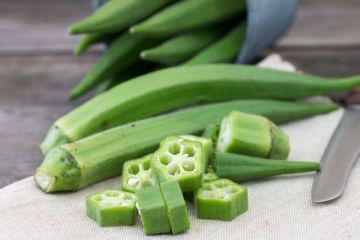
Okra is commonly used in a number of cuisines including Creole, Cajun, Caribbean, Southeast Asian and Middle Eastern. Eating plenty of fruits and veggies like okra may help reduce the risk of many diseases, including heart disease, high blood pressure and some cancers.
Did You Know?
- Okra contains fiber and antioxidants that promote heart health.
- Cooked okra is a great source of folate, which is an essential nutrient during early pregnancy.
- While fresh okra is widely enjoyed by consumers, a large quantity of it is sold to soup companies.
- Mature okra can be used to make rope and paper.
- In Florida, okra is predominantly grown in Alachua, Columbia, Dade, Jackson, Jefferson and Lake counties.
Shopping, Preparing and Storing
- Look for pods under 4 inches long that are free of bruises and are not soft.
- Okra can be kept in the refrigerator for two to three days.
- Blanch okra for two minutes before freezing.
Cooking Tips
- Okra flavors well with peppers, eggplants, onions and tomatoes.
- When okra is cut, it releases a sticky substance with thickening properties that can be used in soups, gumbos and stews.
- Wait to season your okra when sautéing. If you add salt at the beginning of the cooking process or during, it can result in sticky okra.
Okra Nutrition
Serving size: 1 cup
Calories: 35; Total Fat: 0 g; Saturated Fat: 0 g; Total Carbohydrates: 7 g; Protein: 3 g; Sodium: 10 mg
Download a flyer to print about Florida
okra
[
 2.9 MB
]
.
2.9 MB
]
.


