
Carambola
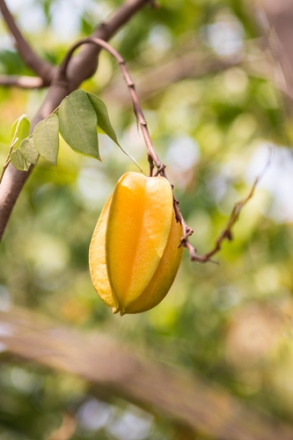
Carambola is packed with nutrients! It is an excellent source of vitamin C. It also contains fiber, folate and antioxidants. Adding more fruit to your diet can reduce your risk of high blood pressure, heart disease and stroke.
Did You Know?
- The carambola is more commonly known as a star fruit because of the shape of the fruit.
- The entire fruit is edible, including the waxy outer skin.
- Carambola can be used in salads, sorbets and drinks to add a tart flavor.
- The carambola is great for eating right out of hand and does not need to be peeled or seeded before eating.
- Carambola is 90 percent water.
Shopping, Preparing and Storing
- A ripe carambola will be bright yellow with tinges of light green and will feel firm. It is normal if there is a brown color along the raised ridges.
- If your carambola is not ripe, let it sit on the counter for a few days.
- The entire carambola can be eaten after washing.
Cooking Tips
- Carambola tastes great raw but can be used in cooked dishes too. Toss slices into stir-fry or broil with honey and serve atop grilled chicken.
- The playful shape of cut carambola makes it perfect for children.
- Add carambola slices to a fruit salad or enjoy alone as a snack.
Carambola Nutrition
Serving size: 1 cup
Calories: 33; Total Fat: 0 g; Saturated Fat: 0 g; Total Carbohydrates: 7 g; Protein: 1 g; Sodium: 2 mg
Download a flyer to print about Florida
carambola
[
 2.8 MB
]
.
2.8 MB
]
.


