
Eggplant
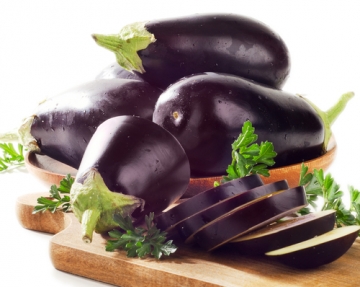
Eggplants provide a significant amount of dietary fiber, as well as vitamins and minerals such as potassium, folate and vitamin K. Florida produces the majority of eggplants grown in the U.S.
Did You Know?
- Eggplant can easily be used as a meat substitute for meatless lasagna, pasta and Parmesan dishes.
- The eggplant is really a fruit that we often use as a vegetable.
- Eggplants can be purple, green, white or striped, pear-shaped or cylindrical. They can range from the size of a golf ball to the size of a football.
- Eggplant is a member of the nightshade family, which also includes tomatoes and hot peppers.
Shopping, Preparing and Storing
- Select eggplants that have a smooth, glossy skin that is free of scars.
- Look for a firm eggplant. Soft eggplants are usually bitter tasting.
- Keep eggplants cool after purchasing and use them within three to four days.
Cooking Tips
- Eggplant is versatile and can be baked, broiled, boiled, stuffed or used in a variety of casseroles in combination with other vegetables.
- Eggplants can be bitter. The best way to combat this is to slice and lightly salt them. Allow them to drain on a wire rack for 30 minutes. Make sure to rinse off the salt and pat the slices dry before cooking.
Eggplant Nutrition
Serving size: 1 cup
Calories: 20; Total Fat: 0 g; Saturated Fat: 0 g; Total Carbohydrates: 5 g; Protein: 1 g; Sodium: 2 mg
Download a flyer to print about Florida
eggplants
[
 2.8 MB
]
.
2.8 MB
]
.


