
Carrot
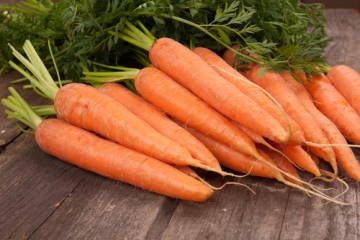
Carrots are packed with vitamin A, which is essential for good vision. Vitamin A also supports cell growth and plays a critical role in the normal formation and maintenance of the heart, lungs, kidneys and other organs. Half a cup of chopped, raw carrots provides more than 100 percent of the recommended dietary allowance of vitamin A for children ages 1 to 8. Eating plenty of fruits and vegetables like carrots may help reduce the risk of many diseases, including heart disease, high blood pressure and some cancers.
Did You Know?
- Carrots are more nutritious when cooked than raw, because cooking softens the cells and makes more nutrients available.
- Just one medium carrot or a handful of baby carrots counts as one serving of your daily recommended vegetables.
- Carrots come in a host of colors other than orange, like white, yellow, red and purple.
Shopping, Preparing and Storing
- If you buy carrots with green tops still attached, remove them before storage.
- Do not buy carrots that are overly large. These will have a tough wood-like core and will not be as sweet.
- Store carrots in the refrigerator in a sealed plastic bag.
Cooking Tips
- Try roasting carrots in the oven. The natural sugars in the carrot will concentrate and caramelize.
- Carrots flavor well with curry, honey, citrus, mint, thyme and rosemary.
- It is best to blanch carrots until almost tender before using them in a stir-fry, because they take longer to cook than most other vegetables.
Carrot Nutrition
Serving size: 1 cup
Calories: 48; Total Fat: 0 g; Saturated Fat: 0 g; Total Carbohydrates: 11 g; Protein: 1 g; Sodium: 84 mg
Download a flyer to print about Florida
carrots
[
 2.9 MB
]
.
2.9 MB
]
.


