
Cauliflower
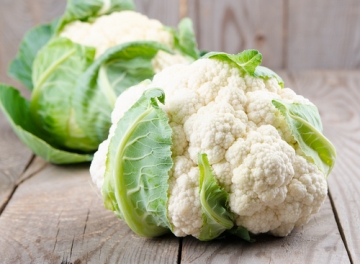
Naturally found in cauliflower, fiber helps with the digestion and absorption of nutrients while also giving you a feeling of fullness. Cauliflower is also high in vitamin C, which is a powerful antioxidant that plays an important role in the body’s immune system. Meet your fruit and veggie goal! Half a cup of cooked cauliflower equals one serving of your daily vegetables. Aim for five servings of fruits and vegetables each day. Eating more fruits and vegetables can help lower high blood pressure.
Did You Know?
- As its name implies, cauliflower is actually a flower! The part of the plant that we eat is the head of the underdeveloped, tender flower stems and buds.
- As the cauliflower grows, the head of the vegetable is surrounded by heavy green leaves called “jacket leaves.” These protect the head from sunlight so the flower buds stay white.
- Overcooking cauliflower can destroy some of its important nutrients.
Shopping, Preparing and Storing
- Cauliflower is typically inexpensive and can be found year-round, fresh or frozen.
- Store raw, uncut and unwashed cauliflower in the crisper drawer of your refrigerator for up to five days.
Cooking Tips
- Raw cauliflower florets make a delicious, crunchy snack, especially when they are served with a low-fat dip.
- You can save the nutrients that are lost when steaming cauliflower by using the leftover water in a soup.
- Try replacing mashed potatoes with mashed, steamed cauliflower.
Cauliflower Nutrition
Serving size: 1 cup
Calories: 25; Total Fat: 0 g; Saturated Fat: 0 g; Total Carbohydrates: 5 g; Protein: 2 g; Sodium: 30 mg
Download a flyer to print about Florida
cauliflower
[
 2.9 MB
]
.
2.9 MB
]
.


