
Papaya
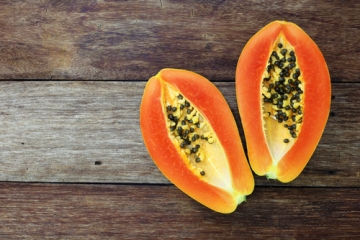
Papayas can be eaten just like a melon. After washing the papaya, cut it lengthwise, scoop out the seeds and eat the fruit with a spoon. One serving of papaya will provide you with the recommended daily intake of vitamin C.
Did You Know?
- The inner cavity of the fruit contains numerous small black seeds encased in a gelatinous substance. The seeds of the papaya are edible and have a peppery taste.
- The papaya fruit contains papain, an enzyme that helps digest proteins and is used to tenderize meat.
- Papayas resemble melons in shape, size and texture. Their flesh is often orange in color with either yellow or pink hues.
- Papayas are harvested in Florida year-round.
Shopping, Preparing and Storing
- Look for papayas that are partly or completely orange or yellow in color, that give slightly to pressure and are free of blemishes.
- Slightly green papayas will ripen quickly at room temperature, especially if placed in a paper bag. As the papaya ripens, the color will change from green to yellow.
- To make papaya wedges or cubes, first peel the papaya using a paring knife or vegetable peeler.
Cooking Tips
- Papayas can be used in marinades, sauces, salads and smoothies.
- Adding lemon or lime juice to a fresh papaya can help enhance its flavor due to the papaya's lack of acidity.
Papaya Nutrition
Serving size: 1 small papaya
Calories: 59; Total Fat: 0 g; Saturated Fat: 0 g; Total Carbohydrates: 15 g; Protein: 1 g; Sodium: 5 mg
Download a flyer to print about Florida
papayas
[
 5.6 MB
]
.
5.6 MB
]
.


