
Guava
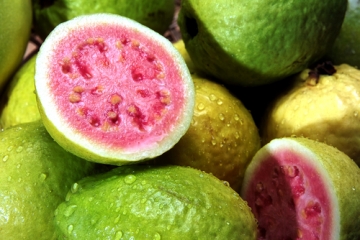
Guava is full of vitamin C. In fact, one guava has about four times more vitamin C than an orange! Eating more fruit like guava can reduce your risk of high blood pressure, heart disease and stroke.
Did You Know?
- In the United States, guava is grown commercially in Florida, Hawaii and Puerto Rico.
- Guavas are rich in dietary fiber, vitamins A and C, folate and potassium.
- There are two types of guava that grow in Florida: pink guava and white Thai guava.
- Pink guavas should be allowed to ripen, but the white Thai guava can be eaten while still firm.
Shopping, Preparing and Storing
- Upon ripening, the guava fruit softens and the skin turns from green to yellow-green and the flesh varies in color from white to yellowish, light pink to dark pink or red.
- When shopping, look for guavas with no cuts, bruises or patches on the skin.
- If you need to speed up the ripening process, put a guava in a paper bag with a banana or apple.
Cooking Tips
- The fruit can be eaten fresh, cut up in fruit salads or used to make guava paste, beverages and jellies.
- Sliced guava cubes are a great addition to fruit salads.
- Diced guava cooked with garlic and ginger makes a tasty sauce for chicken or pork.
Guava Nutrition
Serving size: 1 cup
Calories: 112; Total Fat: 2 g; Saturated Fat: 0 g; Total Carbohydrates: 24 g; Protein: 4 g; Sodium: 3 mg
Download a flyer to print about Florida
guavas
[
 2.9 MB
]
.
2.9 MB
]
.


