
Grapefruit
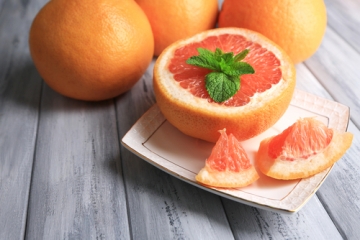
Grapefruit can help you absorb iron! Eating half a grapefruit with your morning breakfast cereal will help your body to better absorb the iron from the cereal because of the high concentration of vitamin C in the grapefruit. Grapefruit is an excellent source of vitamin C and contains fiber and antioxidants. Just half a grapefruit supplies more than 100 percent of the recommended dietary allowance for children and more than 50 percent for adults. Adding more fruits and vegetables like grapefruit to your diet can help lower high blood pressure.
Did You Know?
- A grapefruit is a cross between an orange and a pomelo.
- A normal grapefruit tree produces, on average, 350 pounds of grapefruit in a season. Some older trees have been known to produce up to 1,500 pounds of fruit in one season.
- Florida grapefruit are split into two classifications, white and pink. Each has its own distinct taste.
Shopping, Preparing and Storing
- Grapefruit is usually picked tree ripe and is ready to be eaten once purchased.
- Look for firm yet springy fruits, and as with most citrus, find the fruit that is heavy for its size.
- Scratches or imperfections will not affect how the fruit tastes; however, try to avoid grapefruits that have water-soaked skin, lack of color or soft spots.
Cooking Tips
- Grapefruit flavors well with honey, mint, orange, berries and rosemary.
- Grapefruits can be eaten raw, juiced, added to salads and desserts, or sliced and grilled to use as a side dish.
Grapefruit Nutrition
Serving size: 1 cup
Calories: 74; Total Fat: 0 g; Saturated Fat: 0 g; Total Carbohydrates: 19 g; Protein: 1 g; Sodium: 0 mg
Download a flyer to print about Florida
grapefruit
[
 2.9 MB
]
.
2.9 MB
]
.


