
Passion Fruit
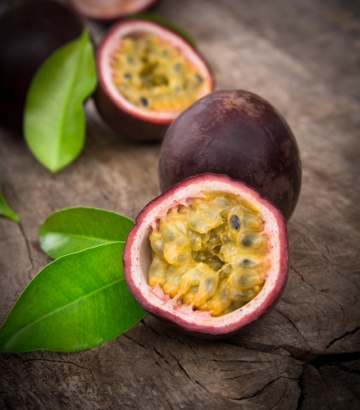
Passion fruit contains vitamins A and C, as well as fiber and potassium. Potassium is important for heart health and can help you maintain a healthy blood pressure.
Did You Know?
- Passion fruit is a source of nonheme iron, or plant-based iron. The vitamin C in passion fruit can help your body absorb the iron better.
- Both the pulp and seeds are nutritious and can be eaten directly from the fruit.
- Passion fruit can vary from the size of a plum to the size of a grapefruit.
- The skin of the passion fruit is leathery and purple, and the fruit contains a yellow, jelly-like pulp packed with edible black seeds.
Shopping, Preparing and Storing
- Look for a passion fruit that has wrinkled skin. This indicates that it is ripe.
- Refrigerate ripe passion fruit in a plastic bag for up to one week.
- To eat, cut the fruit in half and scoop out the pulp, discarding the bitter skin. The seeds can be eaten.
Cooking Tips
- The pulp of the passion fruit makes a great topping for low-fat yogurt.
- Passion fruit is often made into jams or jellies.
- Try adding passion fruit to plain oatmeal for a tropical twist on breakfast.
Passion Fruit Nutrition
Serving size: ½ cup
Calories: 114; Total Fat: 1 g; Saturated Fat: 0 g; Total Carbohydrates: 28 g; Protein: 3 g; Sodium: 33 mg
Download a flyer to print about Florida
passion fruit
[
 2.9 MB
]
.
2.9 MB
]
.


