
Pork
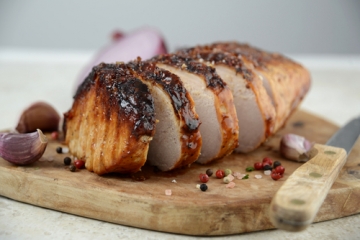
As a good source of protein and nutrients, lean pork plays a role in helping you eat right! Pork has three times as much thiamin (vitamin B1) as any other food. Thiamin helps the body turn carbohydrates, fats and proteins into energy.
Did You Know?
- People around the world eat more pork than any other meat. In the United States pork consumption ranks behind beef and poultry.
- The tenderloin is the leanest cut of pork; a 3-ounce serving contains just 120 calories and less than 3 grams of fat.
- Swine were first brought to Florida by Spanish explorer Hernando Desoto in 1539.
- Pig heart valves can be used to replace damaged human heart valves.
- There are four basic cuts into which pork is separated: shoulder, loin, side and leg.
Shopping, Preparing and Storing
- When purchasing pork, look for cuts with a relatively small amount of fat over the outside and with meat that is firm and a grayish pink color.
- Seasoning pork with herbs and spices is an easy way to boost flavor and cut back on fat. Rub the pork with a combination of herbs and spices, such as rosemary, basil, cayenne or paprika, before cooking.
- Fresh pork roast, steaks, chops or ribs can be stored safely in the refrigerator for three to five days at 40 degrees F or below or for up to six months in the freezer.
Cooking Tips
- Before roasting pork, sear all sides to create a flavorful crusty surface on the meat.
- Cutting meat across the grain will produce slices with shorter fibers, resulting in more tender pieces.
Pork Nutrition
Serving size: 3 ounces cooked pork tenderloin
Calories: 114; Total Fat: 3 g; Saturated Fat: 1 g; Total Carbohydrates: 0 g; Protein: 20 g; Sodium: 389 mg
Download a flyer to print about Florida
pork
[
 767.3 kB
]
.
767.3 kB
]
.


