
Mango
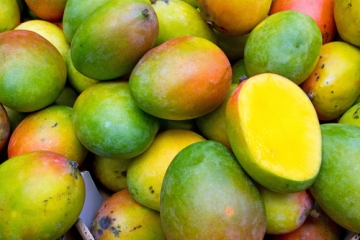
Mangoes are bursting with protective nutrients, such as vitamins A and C, potassium and fiber. A 1-cup serving of mango has just over 100 calories! Eating more fruit like mango can reduce your risk of high blood pressure, heart disease and stroke.
Did You Know?
- Mangoes are related to cashews and pistachios.
- Mangoes were first grown in India over 5,000 years ago.
- Mangoes are reportedly the most widely consumed fruit in the world.
- One medium-sized mango contains approximately 2 cups of edible fruit.
- Mangoes have natural tenderizing properties, making them a perfect ingredient for marinades.
Shopping, Preparing and Storing
- When selecting a mango, squeeze the fruit gently. A ripe mango will give slightly.
- Mangoes will ripen at room temperature, becoming sweeter and softer over several days. To speed up the ripening process, place mangoes in a paper bag at room temperature.
- Mangoes may be peeled, cubed and placed in an airtight container in the refrigerator for several days or in the freezer for up to six months.
Cooking Tips
- Mangoes serve as delicious additions to salads, smoothies and salsas or as a complement to meat dishes, especially in Indian cuisine.
- The sweet flavor of mangoes makes them excellent ingredients in cobblers, muffins and breads.
Mango Nutrition
Serving size: 1 cup
Calories: 107; Total Fat: 0 g; Saturated Fat: 0 g; Total Carbohydrates: 28 g; Protein: 1 g; Sodium: 3 mg
Download a flyer to print about Florida
mangoes
[
 4.7 MB
]
.
4.7 MB
]
.


