
Potato
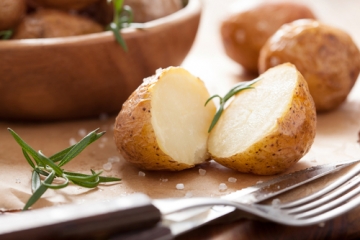
Potatoes are free of fat, sodium and cholesterol; are high in vitamin C; and are a good source of potassium. Potatoes come in lots of varieties! Florida grows many different types of potatoes, from russet to red creamer. There is sure to be one to meet your needs!
Did You Know?
- Florida potatoes are available from January through June, with peak season months in March, April and May.
- When boiled, a single medium-sized potato contains about half of the daily adult requirement of vitamin C, as well as significant amounts of iron, potassium and zinc.
- Cooking a potato in its skin will help retain most of its nutrients.
Shopping, Preparing and Storing
- Avoid potatoes that feel soft or spongy or those with any discoloration, bruises or blemishes. Do not buy potatoes that are showing signs of sprouting.
- Light and humidity are the two main factors to stay away from when storing potatoes.
- Fresh, whole potatoes should not be kept in the refrigerator. Only freeze potatoes after they are cooked.
Cooking Tips
- To keep potatoes from discoloring after they have been peeled or cut, place them in a bowl of cold water with a few drops of white vinegar.
- Be careful not to overmix or overcook potatoes because they can quickly become sticky and too starchy.
Potato Nutrition
Serving size: 1 small
Calories: 131; Total Fat: 0 g; Saturated Fat: 0 g; Total Carbohydrates: 30 g; Protein: 3 g; Sodium: 10 mg
Download a flyer to print about Florida
potatoes
[
 2.8 MB
]
.
2.8 MB
]
.


