
Cabbage
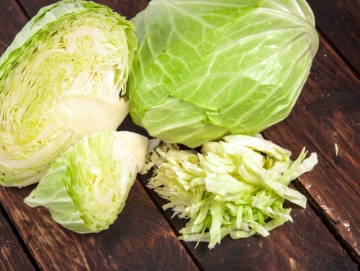
Cabbage is high in antioxidants, which play a major role in preventing cancer and heart disease. Cabbage is one of the oldest vegetables in existence and continues to be a dietary staple throughout the world.
Did You Know?
- Cabbage offers the fewest calories and least fat of any vegetable.
- Cabbage is high in vitamin C, which is a powerful antioxidant and aids in wound healing.
- There are at least a hundred different types of cabbage grown throughout the world, but the most common types in the United States are the green, red and savoy varieties.
Shopping, Preparing and Storing
- Avoid cabbage with holes. Smell the core for sweetness when shopping.
- Whole, raw cabbage should be refrigerated in a plastic bag and will keep for up to two weeks.
- Red and green cabbage should have firm leaves with good color.
Cooking Tips
- Cabbage can be steamed, boiled, braised, microwaved, stuffed, stir-fried or eaten raw.
- Remove any discolored or wilted leaves before cooking.
- Cabbage flavors well with many foods and seasonings. Try it with bacon, caraway seeds, cheese, chicken, cider vinegar, corned beef, etc.
Cabbage Nutrition
Serving size: 1 cup, chopped
Calories: 22; Total Fat: 0 g; Saturated Fat: 0 g; Total Carbohydrates: 5 g; Protein: 1 g; Sodium: 16 mg
Download a flyer to print about Florida
cabbage
[
 1.1 MB
]
.
1.1 MB
]
.


