
Onion
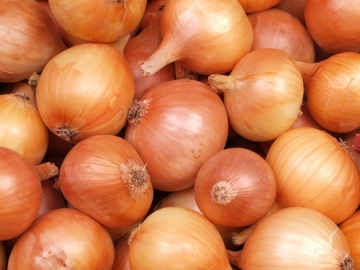
The onion provides layers of flavor, color and texture to a wide variety of dishes and cuisines. Onions are free of fat and cholesterol, are high in vitamin C and are a good source of dietary fiber.
Did You Know?
- The root end of the onion has the highest concentration of sulfuric compounds, which are responsible for making your eyes tear up when cutting an onion.
- The smaller the onion is, the stronger its flavor will be.
- Onions are the third most consumed fresh vegetable in the United States. The U.S. per-capita consumption of onions is about 20 pounds per year.
- Onions are often grouped according to their taste (mild, sweet or strongly flavored), color (white, yellow or red) and use (storage or freshly eaten).
- Onions are available year-round.
Shopping, Preparing and Storing
- Select onions that are firm and well-shaped with a small neck and dry skin. Avoid spongy or sprouting onions with uneven or patchy coloring.
- To reduce tearing when cutting onions, first chill the onions for 30 minutes. Then cut off the top and peel the outer layers, leaving the root end intact.
- Cut onions should be placed in plastic ware and stored in the refrigerator.
- Whole onions can be stored in a cool, dry, dark place for use within four weeks.
Cooking Tips
- Onions can be used raw in many ways, but are often sautéed, caramelized, grilled or roasted and incorporated into recipes.
- High heat makes onions bitter. When sautéing onions, always use low or medium heat.
Onion Nutrition
Serving size: 1 small onion
Calories: 28; Total Fat: 0 g; Saturated Fat: 0 g; Total Carbohydrates: 7 g; Protein: 1 g; Sodium: 3 mg
Download a flyer to print about Florida
onions
[
 1.1 MB
]
.
1.1 MB
]
.


