
Summer Squash
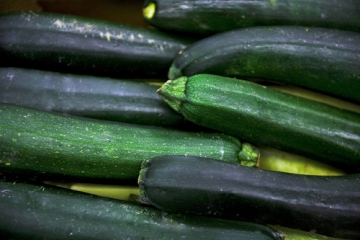
While especially plentiful in supermarkets across the United States during the summer months, Florida summer squash can be found in stores from October through May. Summer squash are high in fiber, potassium, folate and vitamin C. To get the most nutrients, eat the entire vegetable, including the flesh, seeds and skin.
Did You Know?
- Summer squash are more fragile than winter squash and should be eaten fresh or shortly after they are harvested.
- There are three basic types of summer squash: yellow, zucchini and pattypan.
- Squashes are gourds that belong to the same family as melons and cucumbers.
- Summer squash is harvested and eaten while the skin is still tender.
- Most of Florida's zucchini are grown in north central Florida, while most of Florida's yellow squash are grown in west central and South Florida.
Shopping, Preparing and Storing
- Select glossy, deep green, slim and cylindrical-shaped zucchini with no soft spots.
- Select bright yellow, bottle or cylindrical-shaped yellow squash that are heavy for their size.
- Thoroughly scrub each squash under running water before use. It is not necessary to peel summer squash unless the skin is unusually tough or the surface feels especially gritty after washing.
- Summer squash can be stored in the refrigerator crisper for three to five days and should be kept free from moisture.
Cooking Tips
- Summer squash can be grilled, steamed, boiled, sautéed or used in stir-fry recipes. They also mix well with onions, tomatoes and okra in vegetable medleys.
- Marjoram, parsley, dill, rosemary and savory can enhance the flavor of summer squash.
Summer Squash Nutrition
Serving size: 1 cup, sliced
Calories: 36; Total Fat: 1 g; Saturated Fat: 0 g; Total Carbohydrates: 8 g; Protein: 2 g; Sodium: 2 mg
Download a flyer to print about Florida
summer squash
[
 750.4 kB
]
.
750.4 kB
]
.


