
Kohlrabi
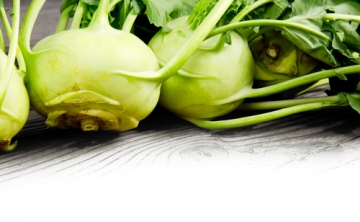
The kohlrabi root is actually the swollen stem of the plant that grows just above the ground and is topped by leaves resembling kale or collards. Fresh kohlrabi stem is a rich source of vitamin C, a powerful antioxidant that helps protect the body from some diseases and cancers.
Did You Know?
- Kohlrabi translates to “cabbage turnip” in German.
- Kohlrabi comes in two varieties: deep purple and vibrant green. Both have pale green to white flesh.
- Kohlrabi belongs to the same family that includes kale, cabbage, broccoli, turnips, radishes and cauliflower.
- Kohlrabi is available in most U.S. markets from late spring through late autumn.
Shopping, Preparing and Storing
- Wash kohlrabi just before using. Small kohlrabi bulbs that are young and tender generally do not require peeling and are delicious eaten raw.
- Medium to large-sized kohlrabi bulbs should be peeled to remove the protective outer skin. The bulb can then be sliced or cut into quarters, cubes or julienne strips and steamed.
- Place unwashed bulbs in your refrigerator’s veggie drawer for up to 10 days.
Cooking Tips
- The kohlrabi has leaves that are tender and excellent in salads. The leaves can be cooked like collard greens.
- Kohlrabi can be shredded, roasted, braised, pickled, baked, sautéed and even stir-fried.
- You can substitute kohlrabi in recipes calling for radishes.
Kohlrabi Nutrition
Serving size: ½ cup kohlrabi
Calories: 18; Total Fat: 0 g; Saturated Fat: 0 g; Total Carbohydrates: 4 g; Protein: 1 g; Sodium: 14 mg
Download a flyer to print about Florida
kohlrabi
[
 1.6 MB
]
.
1.6 MB
]
.


