
Nutrition for Children
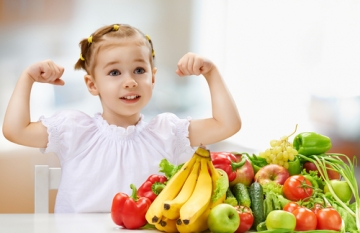
Your child's body needs the proper nutrients to stay healthy. Kids who eat a nutritious, balanced diet are more attentive in class and less likely to become obese and have health issues later in life.
How Much Does My Child Need Daily?
Food Group | Children 2-3 Years Old | Girls 9-13 Years Old | Boys 9-13 Years Old |
|---|---|---|---|
Fruit | 1 cup | 1 1/2 cups | 1 1/2 cups |
Vegetables | 1 cup | 2 cups | 2 1/2 cups |
Grains | 3 ounce equivalents* | 5 ounce equivalents* | 6 ounce equivalents* |
Protein | 2 ounce equivalents** | 5 ounce equivalents** | 5 ounce equivalents** |
Dairy | 2 cups | 3 cups | 3 cups |
Source: www.ChooseMyPlate.gov The amounts listed here are appropriate for children who get less than 30 minutes per day of moderate physical activity, beyond normal daily activities. Those who are more physically active may be able to consume more while staying within calorie needs. *For more information about ounce equivalents of grains, visit https://www.choosemyplate.gov/grains. | |||
Tips for Parents
Parents are the most important influence on children. Parents can do a lot to help their children develop healthy eating habits that will stick.
- Cook together, eat together, talk together and make mealtime a special time for your family.
- Set an example by eating vegetables, fruits and whole grains daily. Let your child see that you enjoy these foods.
- Reward your children with attention, not sweets or dessert foods.
- Give kids choices. Ask "Which would you like — carrots or broccoli?" instead of "Do you want carrots tonight?"
- School meals are a convenient and inexpensive way to ensure your child is receiving the nutrients they need.
- Find more ideas at www.ChooseMyPlate.gov.
Child Nutrition Resources
- Florida Association of Food Banks: The Florida Association of Food Banks’ members are the 13 Feeding America affiliated Regional Distribution Centers in Florida. Members partner with more than 2,500 faith-based and nonprofit agencies meeting the daily needs of people who struggle with hunger throughout all 67 counties in the state of Florida.
- Florida Food Assistance Program: The Food Assistance Program (SNAP) helps people with low income buy healthy food.
- National School Lunch Program: The National School Lunch Program is a federally funded meal program operating in public and nonprofit private schools and residential child care institutions. It provides nutritionally balanced, low-cost or free lunches to children each school day.
- Summer Food Service Program: The Summer Food Service Program ensures that children continue to receive nutritious meals when school is not in session.
- Women, Infants and Children (WIC): WIC is a federally funded nutrition program for Women, Infants and Children. WIC provides the following at no cost: healthy food, nutrition education and counseling, breastfeeding support and referral for health care and community services.
- WIC Farmers Market Nutrition Program (FMNP): The WIC FMNP provides fresh, unprepared, locally grown fruits and vegetables to WIC participants.
Wellness Tips
- Find a balance. Try to balance food intake with your activity level. To maintain your weight, you should not eat more calories than you will burn.
- Start slow. When beginning a weight-loss plan, start slowly and do not expect immediate results. Losing weight takes time; it’s important to set realistic goals.
Teaching Children About Nutrition
- Fresh From Florida Kids: Fresh From Florida Kids was developed by the Florida Department of Agriculture and Consumer Services to provide parents with the knowledge and tools needed to encourage healthy habits from birth. Though the literature mostly provides recipes and information related to young children, there are also healthy family recipes, tips on exercising as a family and food preparation guidelines.
-
Phase I — Focus on Fresh Baby Foods
[
 696.9 kB
]
696.9 kB
]
-
Phase II — Focus on Fresh Finger Foods
[
1.3 MB
]
-
Phase III — Focus on Fresh Toddler Foods
[
840.1 kB
]
-
Phase I — Focus on Fresh Baby Foods
[
- "Xtreme Cuisine" Cooking School: The "Xtreme Cuisine” Cooking School teaches culinary and nutrition education to students from early elementary to middle school.


