
Making Healthy Choices with MyPlate
To illustrate the five food groups that are the building blocks for a healthy diet, MyPlate uses a familiar image — a place setting for a meal. Before you eat, think about what goes on your plate or in your cup or bowl.
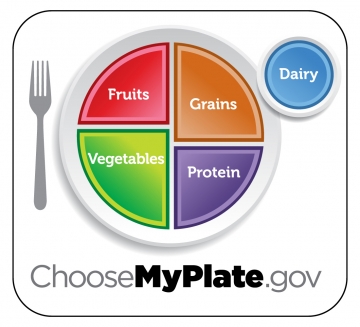
- Balance calories. Find out how many calories you need for a day as a first step in managing your weight. Go to www.ChooseMyPlate.gov to find your calorie level. Being physically active also helps you balance calories.
- Enjoy your food, but eat less. Take the time to fully enjoy your food as you eat it. Eating too fast or when your attention is elsewhere may lead to eating too many calories. Pay attention to hunger and fullness cues before, during and after meals. Use them to recognize when to eat and when you’ve had enough.
- Avoid oversized portions. Use a smaller plate, bowl and glass. Portion out foods before you eat. When eating out, choose a smaller size option, share a dish or take home part of your meal.
- Foods to eat more often. Eat more vegetables, fruits, whole grains and fat-free or 1% milk and dairy products. These foods have the nutrients you need for health — including potassium, calcium, vitamin D and fiber. Make them the basis for meals and snacks.
- Make half your plate fruits and vegetables. Choose red, orange and dark-green vegetables like tomatoes, sweet potatoes and broccoli, along with other vegetables for your meals. Add fruit to meals as part of main or side dishes or as dessert.
- Switch to fat-free or low-fat (1%) milk. Fat-free or low-fat milk has the same amount of calcium and other essential nutrients as whole milk but fewer calories and less saturated fat.
- Make half your grains whole grains. To eat more whole grains, substitute a whole-grain product for a refined product. Try eating whole-wheat bread instead of white bread or brown rice instead of white rice.
- Foods to eat less often. Cut back on foods high in solid fats, added sugars and salt. These include cakes, cookies, ice cream, candies, sweetened drinks, pizza and fatty meats like ribs, sausages, bacon and hot dogs. Use these foods as occasional treats, not everyday foods.
- Compare sodium in foods. Use the Nutrition Facts label to choose lower-sodium versions of foods like soup, bread and frozen meals. Select canned foods labeled “low-sodium,” ”reduced-sodium” or “no salt added.”
- Drink water instead of sugary drinks. Cut calories by drinking water or unsweetened beverages. Soda, energy drinks and sports drinks are a major source of added sugar and calories in American diets.
For more tips, a calorie tracker and physical activity ideas, visit ChooseMyPlate.gov.


