
Argentine Cactus Moth Photos
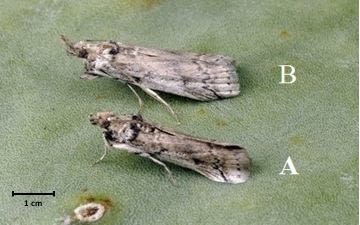
Argentine cactus moth adult male (A) and female (B). Adults rest with their wings wrapped around the body.
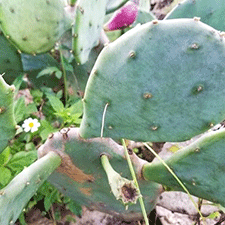
Cactus moth egg-sticks mimic a cactus spine, with the eggs laid like a tall stack of coins.
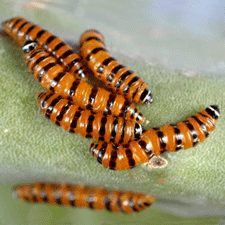
Argentine cactus moth larvae
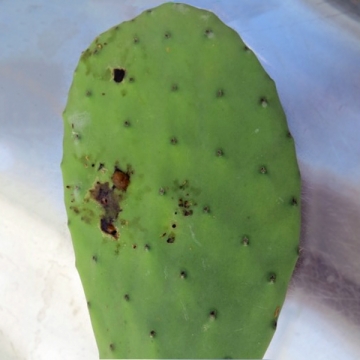
The frass is visible in the cladode.
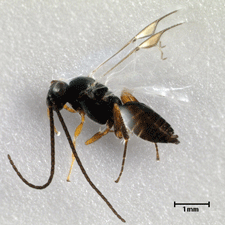
Adult A. opuntiarum, lateral view
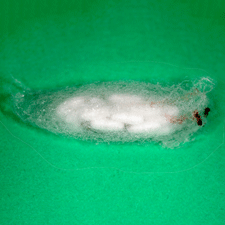
Cluster of parasitoid cocoons
Argentine Cactus Moth Biological Control
Biological Scientist:Dr. Mrittunjai Srivastava
Lab Technician: Danielle Wolaver
The Argentine cactus moth, Cactoblastis cactorum (Berg) (Lepidoptera: Pyralidae), is an invasive pest from South America detected in the late '80s in South Florida.
The discovery of the insect in the United States raised grave concerns of potential adverse impacts on areas rich in prickly-pear (Opuntia) cactus. Opuntia cacti are dominant key components of many arid areas in the southwestern U.S. and throughout Mexico, minimizing erosion and providing food, moisture, shade, shelter and nesting sites for a wide variety of vertebrates and invertebrates.
A combination of tactics such as the release of sterile insect moth populations (Sterile Insect Technique) and sanitation and/or removal of infested host plants has been used to slow the geographical expansion of the invasive moth. Sterile Insect Technique was abandoned after 2012, due to expense and difficulty of application in the swamps of Louisiana. The current area-wide management program focuses on the development of a more sustainable mitigation option that would minimize long-term impacts of the moth on native desert ecosystems and commercial cactus production areas.
In its native habitat in South America, several natural enemies have been identified, including: Apanteles alexanderi (Hymenoptera: Braconidae), Phyticiplex doddi and P. eremnus (Hymenpotera: Ichneumonidae), Brachymeria cactoblastis (Hymenoptera: Chalcididae), and Epicoronimyia mundelli (Diptera: Tachinidae). However, these potential biological control agents lack the specificity to prevent impacts to native non-target insects, especially the many native cactus-feeding moths in North America. A newly described braconid, Apanteles opuntiarum Martínez and Bertha, was observed exclusively attacking Cactoblastis larvae in field conditions in Argentina.
In March 2013, A. opuntiarum material was received from Argentina (FUEDEI, Buenos Aires) in order to conduct host specificity testing of the parasitoid on non-target native cactus moths. Host specificity testing continues within the Florida Department of Agriculture and Consumer Services' containment facility in Gainesville, Florida. The list of potential hosts is extensive, and more experimentation is necessary to ensure that A. opuntiarum is safe to release in North America.
Argentine Cactus Moth Photos
Argentine cactus moth adult male (A) and female (B). Adults rest with their wings wrapped around the body.
Cactus moth egg-sticks mimic a cactus spine, with the eggs laid like a tall stack of coins.
Argentine cactus moth larvae
The frass is visible in the cladode.
Adult A. opuntiarum, lateral view
Cluster of parasitoid cocoons


