
Program Resources
-
Conehead Termite Photo Gallery
[
 11.1 MB
]
11.1 MB
]
-
Reduce the Risk of a Conehead Termite Infestation
[
283.3 kB
]
- Webinar: Conehead Termite Eradication: From a “Coneheadache” to a Light at the End of the Tunnel
- Help Win the Battle Against Invasive Conehead Termites
-
Be on the Lookout for Invasive Conehead Termites
[
12.5 MB
]
-
Farm Bill Final Report
[
1.7 MB
]
- Actions Toward Containment, Control, and Eradication of Invasive Conehead Termites
Contact Us
Sue Alspach
(850) 597-3780
Sue.Alspach@FDACS.gov
Katie Tenn
(850) 528-5411
Katherine.Tenn@FDACS.gov
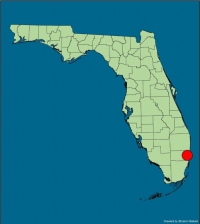
Location of Conehead Termite Infestation
- Broward County Florida

Conehead Termite Eradication Program
The exotic conehead termite, Nasutitermes corniger, has been found in Broward County, Florida. This is the only known occurrence of conehead termites in the United States. It is assumed that conehead termites entered the state in wooden packing material from a boat that had traveled through the termite’s native range, the Caribbean and Central and South America, and docked at a marina in Dania Beach.
Report Conehead Termites
The Florida Department of Agriculture and Consumer Services (FDACS) is working diligently to prevent this invasive termite from becoming permanently established and spreading further throughout the state. FDACS asks Floridians to be on the lookout for these invasive pests and to report any suspected sightings.
Conehead Termite Damage
Coneheads can wreak havoc on structures and landscapes, causing extensive damage. They eagerly consume dead wood from live or dead trees, shrubs, grasses, roots, wood in structures and furniture, and cardboard and other paper products.
Conehead Termite Identification
Unlike all other termites in South Florida, the soldier form of this termite species has a cone-shaped, dark brown head from which it secretes a pine sap-like chemical to ward off predators, including ants, lizards, and termites from another colony. Soldiers are difficult to identify with the naked eye due to their size, but the above-ground tunnels they construct (see below) are easily seen and may signify the presence of this species.
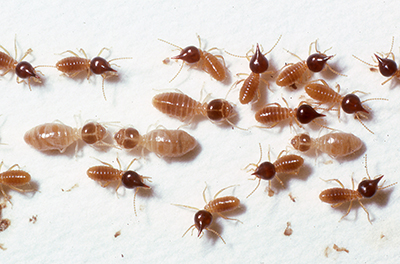
Conehead termite workers and soldiers
(Photo: B.L. Thorne)
What to Look For
Tunnels
Coneheads travel to their feeding sites in narrow (usually 1/2 inch wide or less) brown tunnels, or termite highways, on the sides of trees, houses, fences or other surfaces.
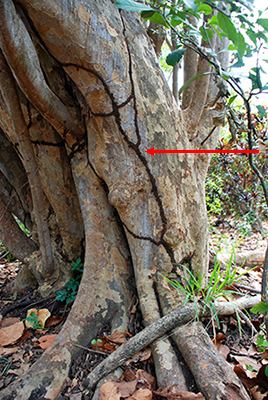
Tunnel on a sea grape tree |
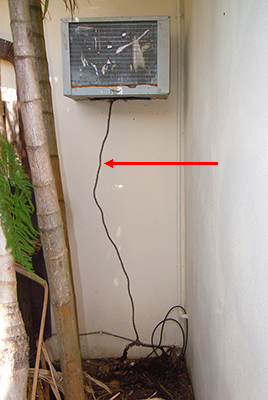
Tunnel on a house wall |
Swarmers
In spring, winged termites, called alates or swarmers, leave their nests and fly to a new location to start another colony. This is how the termite infestation spreads. Dark wings distinguish conehead swarmers from other local termite species.
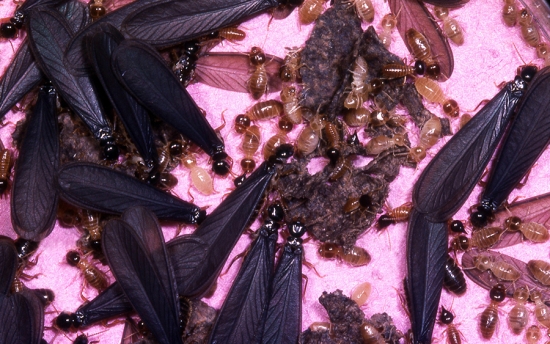
Conehead swarmers (alates)
(Photo: B.L. Thorne)
Nests
These termites build large, dark brown nests with a hard, bumpy surface. Nests can be on, in or by trees or structures, on open ground, or hidden within vegetation.
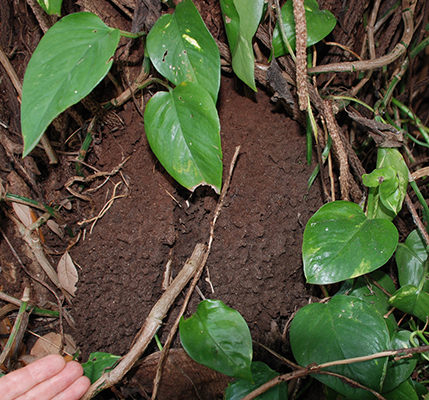
Nest at the base of an oak tree |
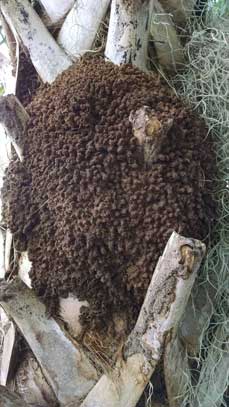
Nest in a sabal palm tree |
Program Resources
-
Conehead Termite Photo Gallery
[
11.1 MB
]
-
Reduce the Risk of a Conehead Termite Infestation
[
283.3 kB
]
- Webinar: Conehead Termite Eradication: From a “Coneheadache” to a Light at the End of the Tunnel
- Help Win the Battle Against Invasive Conehead Termites
-
Be on the Lookout for Invasive Conehead Termites
[
12.5 MB
]
-
Farm Bill Final Report
[
1.7 MB
]
- Actions Toward Containment, Control, and Eradication of Invasive Conehead Termites
Contact Us
Sue Alspach
(850) 597-3780
Sue.Alspach@FDACS.gov
Katie Tenn
(850) 528-5411
Katherine.Tenn@FDACS.gov


